

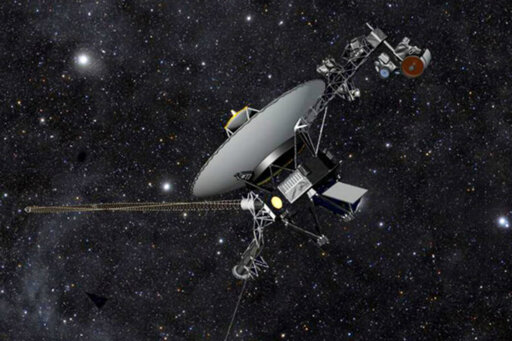
A kilobyte must have sounded like so much memory back then.
A byte is 8 bits. Even if we want to call bits quarters ($0.25) and bytes dollars, 69KB would be $69,000! That’s a lot of dollars.
(And it’s actually 1,024 or something instead of 1,000, which just increases it that much more).
It’s crazy how KBs used to be incredibly meaningful, and now we’re buying multi-TB drives like they’re nothing!
EDIT: Math fail. Let’s say TWO bits are a quarter…lmao
In 1977 69 KB was huge memory. First home PC’s from 1980 and 1981 like ZX81 they have 1 KB of memory. One.
The Commodore 64 came out in 1982 and famously had 64KB of memory.
Commodore VIC-20 came out in 1980 with 20KB as well.
20KB of ROM and 5KB of RAM, though that was expandable!
5KB of RAM
TIL! I’ve been living a lie for decades thinking the 20 in VIC-20 was the amount of RAM like the 64 in C64 meant the amount of RAM. I only owned the C64, never a VIC-20.
I could never get my Zx81 to save data tape.
Not really, mainframes could have 8 megs of core in the 1960s.
Hopefully it doesn’t get blown up by some bored Klingon.
Aliens find it and love our retro tech. “8 track!”
Nice
adj.
…
- Showing or requiring great precision or sensitive discernment; subtle.
Does anyone know if the code that Voyager 1 (or similar era tech) is running is available anywhere for inspection? I would love to poke around in such a historical code base.
I don’t really understand what I’m looking at, but this looks like a good place to start:
https://github.com/SRF0x41/Voyager1
There are links to actual code at JPL, but I don’t know if everything is published online.
I would think not. They wouldn’t want anyone analyzing it and attempting to send code to the Voyager. Some asshole would break it for lols or politics.
If we wanted to impress the aliens, we should have sent MiniDiscs, even if it meant delaying the mission a little while.
ah…back when Star Trek had some actual science fiction in plots.


