


Despite the US’s economic success, income inequality remains breathtaking. But this is no glitch – it’s the system
The Chinese did rather well in the age of globalization. In 1990, 943 million people there lived on less than $3 a day measured in 2021 dollars – 83% of the population, according to the World Bank. By 2019, the number was brought down to zero. Unfortunately, the United States was not as successful. More than 4 million Americans – 1.25% of the population – must make ends meet with less than $3 a day, more than three times as many as 35 years ago.
The data is not super consistent with the narrative of the US’s inexorable success. Sure, American productivity has zoomed ahead of that of its European peers. Only a handful of countries manage to produce more stuff per hour of work. And artificial intelligence now promises to put the United States that much further ahead.
This is not to congratulate China for its authoritarian government, for its repression of minorities or for the iron fist it deploys against any form of dissent. But it merits pondering how this undemocratic government could successfully slash its poverty rate when the richest and oldest democracy in the world wouldn’t.
Eh…
I’m glad my homeland is doing a lot better these days, but still, for my family, we end up doing better in the US (we moved around 2010 for context, way before this admin), the first few years in the US was a struggle, the similar stuggle as before in Guangzhou, but eventually we have a house and then we started saving up and we have a small bussiness and some investments here in the US. So it really depends on personal circumstances…
In China, everyone has an ancestral house, but that is in your village; in the city, unless you are from the city, you probably won’t have housing. Jobs were in cities, so people migrate there, migrant workers… most of them have to rent a small apartment unit, probably in some slum. There are handweitten “for rent” posters everywhere. My family didn’t have to rent, they “bought” an apartment in Guangzhou (bought in quotes because the 70 year lease thing… which we still don’t know how it works… 70 years have not passed), its a very shitty one, in a slum neighborhood, but that was all they could afford. Most had to rent.
Prior to the Opening Up and Reforms, people weren’t allowed to move around, so you’d just get stuck on your farm… and farming manually… which really sucks.
After the Opening Up and Reforms, the relaxed the restriction on movements. But the Hukou still had restrictions.
I was born in Guangzhou, but wasn’t allowed into their public schools, no Guangzhou Hukou, my hukou was Taishan, my mom had to pay for a privately-run one that she said was inferior to the public school. Some migrant workers just left their kids beind in their village to attend school there. So those kids rarely get to see their parents. I did see them because I was going to school in Guangzhou so we didn’t really get separated like those kids did, but usually we didn’t get to see out parents for most of the day, so either grandmother was home to watch me and my brother, or sometimes we just get left at home alone.
I think most of the kids in that school I went to were all kida of migrant parents… because a Guangzhou kids would just go to public school.
Someone with Taishan Hukou also can’t like get any healthcare benefits of Guangzhou.
It’s like a internal passport system. Countries withing countries…
Then there was another issue with me essentially being an “illegal child” since my mother violated the 1 child policy, as I was the 2nd to be born, so my parents had to pay a huge fine before I can even get registered in Hukou and legally exist and have identity documents.
Converting to Guangzhou Hukou was practically impossible. Somehow, getting US citizenship was easier… 🤷♂️
Maybe one day this stupid Hukou thing goes away, because it is stupid af.
Believe it or not, there are plans to “overhaul” the Hukou system.
https://thediplomat.com/2024/08/china-unveils-ambitious-5-year-plan-to-overhaul-the-hukou-system/
Recently I think they make it so couples can register their marriage in any jurisdiction. And not have to go to one of the couple’s birth town.
https://www.globaltimes.cn/page/202505/1333785.shtml
I couldn’t fully understand whether or not their children’s Hukou will now be in the location of their marriage registration. But it’s a good step forward and they saw a brief spike in marriage registration overall.
It’s so weird that they’ve been so stubborn about it for so long, even as their cities expand to accommodate migrants and the population growth is slowed.
Haven’t things changed a lot there since 2010?
Too late, PRC does not do dual citizenships lol. I have US citizenship now so PRC citizenship is automatically revoked. No going back. (It’s not like I want to tbh).
But AFAIK, Hukou issues is still a problem.
Language is probably my biggest issue. My English is literally like 10x better than my knowledge of Chinese, so there’s no way I’d fit in, I mean I could probably read signs, but I can’t do any serious conversations.
I think people are still trying to emigrate, during the Biden admin, there were supposedly a lot of Chinese nationals trying to enter without permission via the Mexican border, I think thery were trying to claim Asylum or something, but with this admin’s autocratization, that went down. But there are still a lot of other (Non-US) western countries people try to go to.
Prior to the Opening Up and Reforms, people weren’t allowed to move around, so you’d just get stuck on your farm… and farming manually… which really sucks.
It’s weird to raise this as a concern relative to the history prior to the revolutionary era. Like folks who bemoaned the loss of the antibellum American South or the Batista Era Cuba or Peronist Argentina.
It’s weird to raise this as a concern relative to the history prior to the revolutionary era.
It’s different because this affected the people who are still alive today.
The reform being talked about started in 1980, and didn’t become available to the broader population until pretty recently. Even today, children aren’t allowed to attend public schools outside of their ancestral home town.
So if you were born in 2000 to parents who had moved to Shenzhen, they’d still have to send you back to whatever rural village your grandparents were from, and didn’t have access to schools or healthcare otherwise. Now, you’re 25 years old and lived most of your life seeing your parents once a year, and still have an internal passport-like document tying you to that ancestral village.
There are more reforms on the horizon, but trying to explain just how pervasive the hukou system still is (and how much it affected the people who are alive today) is really hard to grasp for people not familiar with the system.
The reform being talked about started in 1980, and didn’t become available to the broader population until pretty recently. Even today, children aren’t allowed to attend public schools outside of their ancestral home town
A lot of that is simply issue of capacity and social management. The famines that everyone loves to blame Communism for in the 1960s came out of an urban economic boom that drew in peasant farmers without regard to the ecological consequences. We saw similar catastrophes in Europe and the Americas during early industrial periods, with a bad crop year spiraling into food riots and panics as farmers abandoned their crops in droves.
The fundamental difference between Chinese commune policies and, say, American sharecropping or Cuban sugar plantations is that the workers had no title to their land, not that they couldn’t leave it.
So if you were born in 2000 to parents who had moved to Shenzhen, they’d still have to send you back to whatever rural village your grandparents were from, and didn’t have access to schools or healthcare otherwise.
Your parents would have moved to Shenzhen to take advantage of the enormous export boom out of Hong Kong. You’d be drawn into the factory system just like your parents, with minimal education and poor social services.
But, as a consequence, Shenzhen enjoyed an equivalent dividend in wealth, resulting in the construction of new schools and clinics which were subsequently opened to the public as fast as the state bureaucrats could stand them up.
Compare this to, say, London or Miami or Mexico City during this same period. Wealth wasn’t captured for the benefit of the working classes. Instead, the cities privatized their public amenities and inflated speculative real estate bubbles.
Ten years down the line, people in Shenzhen had access to education, health care, and transit comparable to anything you’d find in the developed world. Meanwhile, Westerners were watching the Housing Crash erode their way of life and imposing brutal austerity measures on their local people.
The fundamental difference between Chinese commune policies and, say, American sharecropping or Cuban sugar plantations is that the workers had no title to their land, not that they couldn’t leave it.
I’m not talking about Chinese commune policies. I’m talking about the hukou system, and its effects on how children were raised in China between 1990 and 2010. As in, the lived experiences of Chinese people between the ages of 15 and 40 today.
It’s absolutely relevant to people today, not least of which was the original comment you were responding to, a firsthand experience of what happened to that commenter’s migrant family in Guangzhou as recently as 2010.
I’m talking about the hukou system
A consequence of early communal capital allocation. The state had already built up a surplus of health and education inventory, having failed to anticipate rapid migration to the cities. Rather than overflow the existing system, they told people to return to their native villages for services.
You can debate the ethics or efficiency of this system. Hardly the first time ranking bureaucrats failed to anticipate a sea change in social behavior and decided punitive measures would work better than short-term rapid expansion of social services. But the state bureaucracy quickly sought to rectify the system by expanding capacity in the cities, culminating in a reform of Hukou in '86 and another in '93.
But this created its own crisis as people back in the rural communities recoiled at what they saw as an abandonment of the Communist ideals of the Maoist Era. So they flooded into the cities in protest, culminating in the famous Tienanmen Square riots and subsequent military repression. Any policy that has a negative consequence is a form of authoritarian villainy, without regard to the intended consequences or broader benefits. When you’re a communist. If you’re implementing unpopular policies on a restive public when you’re a capitalist, the rules are reversed.
a firsthand experience of what happened to that commenter’s migrant family
If I had a $1 for every person on the internet I ran into who had a “I just happen to have a first-hand account that proves I’m right, take my word for it”…
Hell, I’ve got more than a few. I just don’t consider “my personal anecdote” irrefutable proof that an entire country is run by cartoon villains.
The idea that they have zero poverty is just absurd.
The source is the World Bank. They are extremely unlikely to lie about this as their ideology is diametrically opposed to communism.
I appreciate your fine estimation of TWB, but a study is only as good as it’s data.
Data from the government, by the government. Have conditions and quality of life improved? Yes. But it was only a few years ago the people were buying gross tonnage of cheap fashion clothes during a rather harsh winter so people could survive the cold by burning it instead of coal to heat their homes.
That’s not even counting the hundreds of millions that live life like it’s the great depression, and the conditions in which they work.
Source? Seriously, if you’re going to dispute sources you have to provide a better one.
The source: It’s me.
I made it upI work my ass off to keep up on ongoing trade stats and national publications, as well as first hand sources including some colleagues world-wide.If you want to make a hobby of it, I’d recommend putting a little extra spending cash into a good radio receiver and your pick of audio translation software, you can time it to get live updates on policy from almost any country one way or another.
Right…but you can’t swing from one extreme (zero poverty) to the other (hundreds of millions living like it’s the Great Depression). Neither are true.
It should be noted that poverty in China isn’t the same as poverty in the USA, ie when you adjust for wages v cost of living it doesn’t tell us much, because the systems are incompatible. All those people in China making below $1.90 US a day (or whatever your metric is) aren’t in the same boat they’d be in in the US, and vice versa.
But all of this ignores the topic of the post: China did indeed raise virtually all of its citizens out of poverty, and the US didn’t. But it’s really weird to just throw that factoid out there without acknowledging that China did it at the expense of the US.
True, I do have a habit of getting overly enthusiastic in my use a metaphor, lmao and humor as I see.
Compared to what life was like pre-80’s? Yes absolutely things have improved, but even if improvement of conditions exist for those into the billion, that doesn’t exclude the relative conditions on the ground.
Unemployment is growing in younger demographics at rates near the peak of what the US experienced in 33. If you compare overall, sustain unemployment year to year is worse. Continuing lack in stability in land value has changed what was a bedrock backing for generational social mobility into a risky hedge for many.
As you well know, and have said, just going off of say strength of the ren for pure purchasing power or daily wages is misleading. Compare the shifts in collegiate achievements, the chosen international schools that the middle class are sending their kids to get their degrees. Look towards the shifts in lower class, especially in the cities, towards day labor over even extended work contracts or proper salary. Look towards the accessibility of central heating, plumbing, electricity. See the treatment of the lower half a billion of Chinese society when they need to access healthcare, when they need the law. What is their commute like?
They might be opposed to communism but probably not authoritarianism. I’m sure China is well past its communist days and far into its world bank days.
when the richest and oldest democracy in the world wouldn’t.
I like that it uses “wouldn’t” rather than”couldn’t”. So relevant to today’s politics
Excuse me, have you heard of the K shaped economy? It’s the everyday hellscape we now live in, where the rich can’t buy enough, and the poor can’t buy anything. Plane ticket sales down, first & business class have no inventory. Less people than ever can afford a house, and mega mansion sales are booming. We can’t afford groceries, but 5* restaurants have no reservations.
At some point, this shit comes to ahead. My pessimism suggests the rich want to figure out AI / robot security, so they can stop relying on any people at all.
Oh yeah, add in some sycophantic computers telling everyone they are perfect and every solution we have is paradigm breaking or revolutionary. Nothing will go wrong at all.
My pessimism suggests the rich want to figure out AI / robot security, so they can stop relying on any people at all.
Look at the plans to tech-ify Gaza. This is exactly what is planned
I’m not a big Revelation person, but it does seem like we really like to fight over that area. A bunch of billionaires? In one place? Being secured by robots with guns? Nothing can go wrong there either.
Not surprised at all. American has done a fantastic job at propagandizing the populace against China.
Does China have major issues? Yes. Does China care more about its own sucess as a whole? Also yes. America invested in individuals, Chain invested in their people. This is the natural outcome.
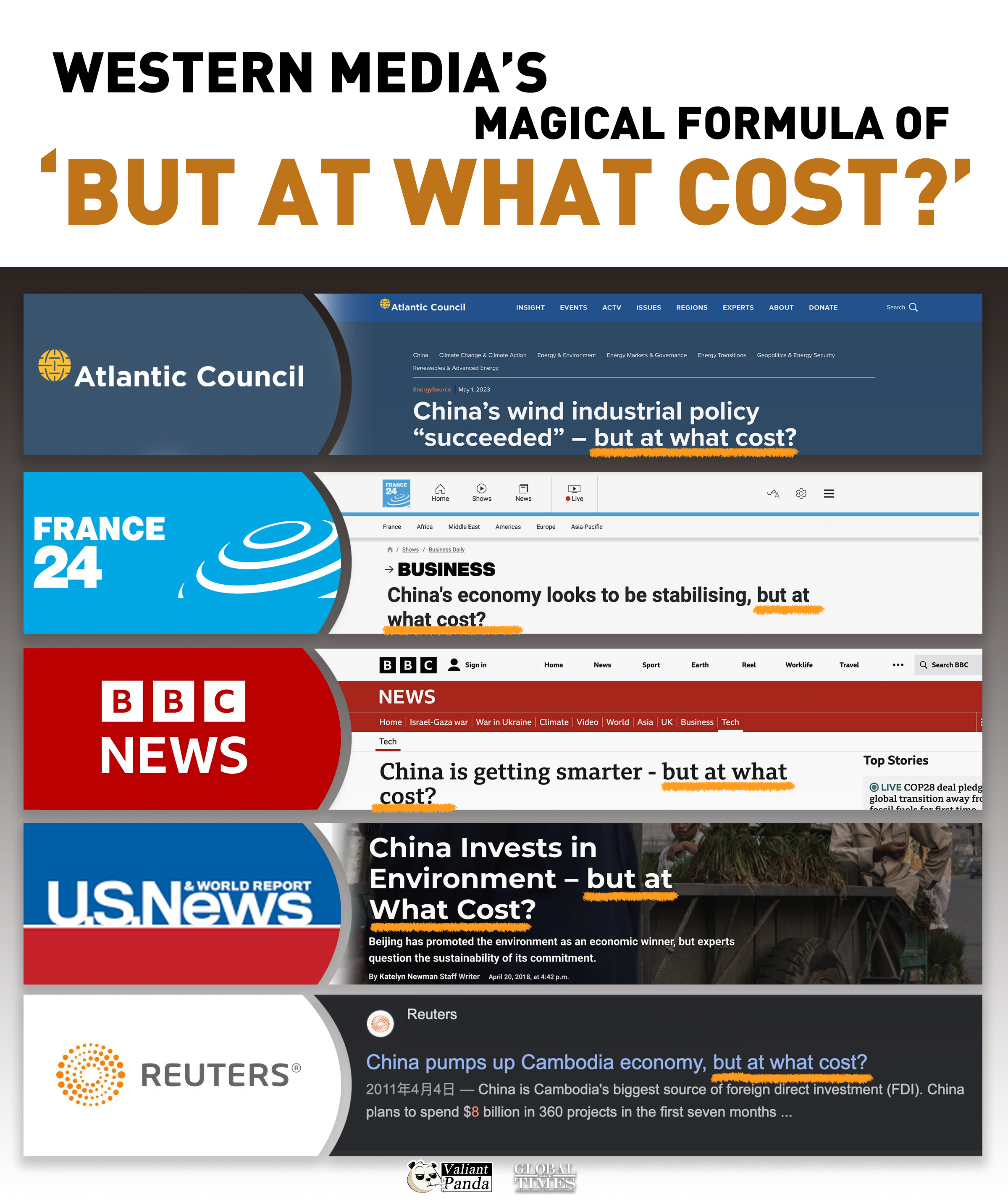
all i can do is lol and roll my eyes
i don’t believe a word about china on lemmy
On one hand, it looks so great.
On the other hand, you got a bunch of people lined up at foreign embassies/consulates, waiting for their interview and hoping for immigration visas.
But it merits pondering how this undemocratic government could successfully slash its poverty rate when the richest and oldest democracy in the world wouldn’t.
My favorite idea is that the Mainland regime – then under Deng – took their economic development ideas and business customs from Japan – including industrial espionage – and basically modified those for Chinese needs while addressing the problems which led to Japan’s later bubble burst by the late 80s. That local corporations were given first priority, with a lot of incentives, tax breaks, programs to increase productivity and cut away inhibitions, hire young people from the far provinces who are willing to work for less, anything to have the world buy cheap from China. So they treated business like warfare, as essential for national survival and prestige where by 2049 the world must look up to Mainland China, never to be humiliated again.
However, China in its current state has its younger generations in urban areas having to deal with overwork burnout (996工作制 or 996 working hour system for example) and so creating basically its own anti-work culture. That there are godawful displays of wealth by tuhao almost everyday, while most others complain how it’s so expensive to live in, say, Shanghai. I could try to go on, but I put it that it’s still not a happy place as long as there is class conflict.
Different starting points, it used to be 8/10 Chinese living in extreme poverty.
Yeah, that graph scale is absurd for comparison… I get it, they want to highlight the ‘trend’ but the scale of the US graph is nothing but a neglible slice of the boottom of the China graph, it’s just impossible to intelligently compare the ‘trends’ in that manner…
Also skeptical of a claim of 0.0% for anyone. It looks to me that, by the criteria of the graph, china has managed to effectively tie the US on this sort of metric, and the US has roughly held it flat for the last 30 years.
As others point out, this particular metric may not be a good one, and depending on how you slice the other metrics, either China or US technically comes out ahead, but broadly a more comparable standard of living.
The answer is socialist policies, or social democrat policies, or whatever-the-fuck-you-want-to-name-it-to-come-to-terms-with-it policies. China hasn’t even been particularly good with them, they’ve just managed to have them. That’s all you need, to accept them as good instead of demonizing them. Which makes some trends in the countries that do have them sad.
China, in large part, raised people out of poverty at the expense of the so-called “west”…so it’s no mystery that the US was unable to do the same. The wests’ corporations needed cheap labour, and China was happy to accept the jobs. We all know this. Trump got elected because he was the first to overtly acknowledge that reality and propose a solution. Now, his “solution” will only exasperate the problem because he’s ultimately a corrupt fascist…but there’s a lesson there that hasn’t been learned yet.
his “solution” will only
exasperateexacerbate the problemMy eyes are so bad I can’t tell which way either of those words is spelled.
So did Taiwan, Eastern Europe and dozens of other countries without sacrificing human rights as much as China. So tired of “they’re evil but hey that’s the only way to not be poor!” bullshit that validates dictators.
Expected better from The Guardian than to use this bait to illustrate US’ shortcomings. The world does not revolve around US and to poke america you don’t need to validate dictators.
I’ll take Republic of China over the People Republic of China anytime. Free West Taiwan, Tibet, Hong Kong SAR and Manchuria. None of them wanted the CCP and PLA rule.
Lol.
“West Taiwan” is a funny meme,
but as a anti-CCP Chinese American, I cringe every time I hear white westerners on the internet say this, especially in a serious discussion.
It just make you look un-serious.
I visited Hong Kong SAR and the PRC numerous times for business, which included several 6 to 7 week stays in Guangdong (Shenzhen area). I always looked forward to the weekend in Hong Kong, because I considered the city to be far more civilised than the shit I saw in the PRC. Japan, South Korea, Hong Kong, Taiwan and Singapore are far superior to anything under CCP rule.
I mean, yes I agree that CCP sucks, but please don’t “West Taiwan” under a serious news article lol. You’re not gonna convince any Mainland Chinese when you argue like that.
Usually when you say stuff like that, people double down on their beliefs, so you’d just inadvertently make someone more pro-ccp rather than making them more open minded.
That’s not true. I mean…I’m sure you’re being hyperbolic, and there’s certainly discontent in a 1 party system…but I have some exposure to ordinary Chinese people as well as regular people in Hong Kong and Taiwan, and the sentiment is mixed, at worse.
That’s not true. I mean…I’m sure you’re being hyperbolic, and there’s certainly discontent in a 1 party system…but I have some exposure to ordinary Chinese people as well as regular people in Hong Kong and Taiwan, and the sentiment is mixed, at worse.
The sentinment is this: “黑猫白猫,做到老鼠就是好猫。” (“Doesn’t matter if it’s a black cat or white cat, if it can catch mice, its a good cat” “cat” referring to the political system)
Doesn’t matter who’s in power. Mao Zedong or Chang Kai-shek.
Doesn’t matter if it’s Obama, or Hillary, or Trump, or Biden, or Kamala, or Pence, or Vance, as long as they prosper under it, anything is fine.
“Don’t worry son, ICE is only going after the Mexicans and ‘illegals’, just don’t draw attention and everything is fine! What’s there to worry about, we all came legally.”
That’s my parent’s attitude towards politics, no matter what country. Do not be a dissident, is their motto. Low profile, just worry about your self, stop worrying about others.
You know what the irony is. They disagree with the One Child Policy, gave birth to me against policy, then mom got had to get sterilized as a result of the violation and had to pay a huge fine.
Then moments after they tell me about that, they just brush it off like it’s no big deal. Then I criticize CCP and they’re like: “but the party wasn’t able to terminate you, and you’ve alive, so stop talking about it” Already making excuses for a party that they disagree with on policy. I guess its that mentality again: didn’t affect me, I managed to have a second son, who cares about the policy anymore
Thank you very much for this response. I must admit, I’m in over my head when it comes to deep engagement on this issue. I have several friends in the regions I listed who are of middle to low socio-economic importance in their respective areas, and I keep in touch with them almost exclusively online.
I understand and appreciate your perspective and thank you very much for sharing it with me. I’ll definitely be considering it when I think about this in the future.

China is just as inequal according to Gini index
deleted by creator
With the Slavic countries like Ukraine, Slovakia and Slovenia being some of the best.
Having been in Ukraine, Singapore, China and the US, by far the worst standard of living country is Ukraine and it’s not even close.
deleted by creator
It takes income inequality into consideration. What’s the point of low inequality when it’s because everyone is poor?
Even more importantly, it’s trending down, and the new 5-year plan has a goal of improving incomes in order reduce reliance on foreign consumotion. That is likely to continue shrinking inequality and improve standard of living for the majority.
deleted by creator
Sorry, I’m not sure how you got I was talking about the US. I’m talking about China. Even mentioned the 5-year plan. Not trying to insult, just genuinely surprised. 😄
It was hugely reduced under Biden, and nobody noticed
Where’s the .ml that usually signifies tankie propaganda?
Right… Those famous tankies, The Guardian.
Just pretend it’s there. Then you can go back to sleep and not worry too much about anything beyond your visual range. It sounds like that would be best for you and your… capabilities.