

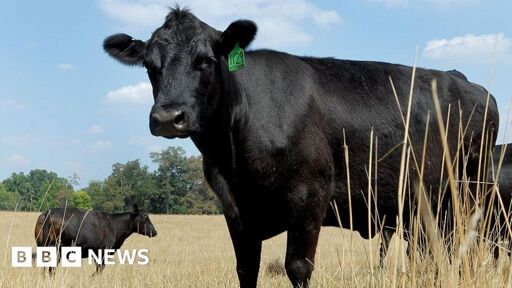
With US beef prices soaring to record highs, you might think that South Dakota cattle rancher Eric Gropper would be celebrating.
Yet while the cost of the meat in US supermarkets is now 12% higher than it was a year ago, a rise more than three times the rate of general inflation, Gropper says that he and all the other beef farmers aren’t making any more profit than usual.
The details the article covers are interesting, but not one mention of what is causing record droughts and how the industrial cattle industry contributed to the climate crisis. The end of the article made it seem like a return to normal for the cattle industry is inevitable, but it really is not a sustainable feature of our culture.
Monopolies or Oligopolies will do that, yes. Can’t sell high because only a few players that all price identically; cant buy low because only a few players that all price identically. Capitalism without competition is feudalism.
There’s plenty of competition at the rancher level. That’s not the issue. The bottleneck is the meat processors. That’s where the oligopoly is. All the beef at the grocery store goes through a couple of major processors.
You can get beef for cheaper wholesale or buying beef shares. Even with processing from a smaller place, you’re looking at $8-10/lb for buying a whole beef, which is way cheaper than the grocery store. You just still need a place to keep 400+lbs of beef frozen.
This is just a long and drawn out way of saying “the meat industry is undergoing a lot of supply-side shocks”
