

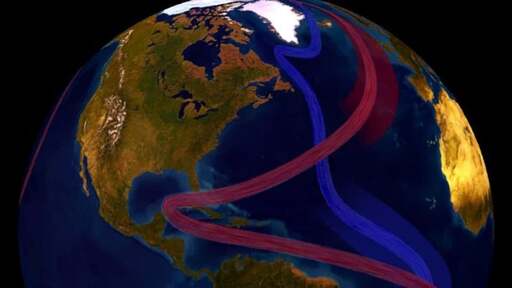
“In a study that has yet to undergo peer review…” tells you all you need to be concerned about for right now. AMOC is a very complex phenomenon and not easy at all to model. All conclusions should be properly vetted before becoming actual news.
Nah… this is 2026! You can just say things now! Go back to the 90’s with your scientific integrity, party pooper.
I’m sure gizmodo has it covered
There have been dozens of studies indicating issues with AMOC, but because the latest one has yet to be peer reviewed we should do nothing and ignore all the warning signs
IDK, maybe just this once we act early. What’s the worst that happens, we reduce pollution a bit? We invest too much into scientific research?
I get that it’s easy to to jump to conclusions online but you literally have me all wrong. I work in researching carbon sequestration. As already mentioned in a different comment reply, I’m happy that people are researching AMOC and the consequences its weakening will bring. But, there’s a very big difference between saying, “AMOC is weakening and may collapse at some point if things don’t change”, and “we’re already past the point of no return”. One is a helpful statement, the other just drums of despair, which isn’t a helpful emotion for tackling climate change.
If you look at the pre-print, its written to my eyes in a somewhat unscientific manner relative to most other climate publications, and so I kind of doubt its rigor. If you want an in-depth review, https://www.annualreviews.org/content/journals/10.1146/annurev-marine-040324-024822 presents an update article on why exactly making this sort of conclusion is difficult.
You can also go find the article and read it and judge it for yourself.
Thing about it is, something will happen. Complexity aside. If it changes, the likelihood of a bad outcome is significant.
In my groundbreaking (yet to be peer reviewed) research, Ive found evidence of the Moon being 98% Gouda cheese. The remaining 2% is actually avocado toast
I’ve been saying it’s imminent for a while now, because I’ve been seeing studies about this come out for years and it seems like every one revises the estimate to be earlier.
Can the crash and burn of civilization HAPPEN ALREADY?!?
THE SUSPENSE IS FUCKING KILLING ME JUST DO IT FFS
AMOC is extremely important because it spreads nutrients north and mixes cool water in the south, and its collapse will lead to extreme droughts in some areas, floods in others, extreme cold in others, and extreme heat in others, which will lead to agriculture collapse and food security issues, leading to more wars and migration, leading to even more wars, etc.