• 2 Posts
  • 921 Comments
Joined 3 years ago
cake
Cake day: June 15th, 2023

help-circle


  • I can think of a few reasons.

    First, there is a school of thought that says that the planet is ultimately doomed, and if we want to survive as a species, we need to get off of it. The first step is setting up an off-world base and maintaining it. The Moon is the most convenient place for that. Once we establish that, Mars is the next logical step.

    But from there, we also need to get to other places in the universe. The gravity on the moon is significantly weaker than Earth, and it would cost much less fuel to launch to other planets (and beyond) from the moon than from Earth. Of course, that advantage is negated if all that fuel needs to come from Earth, so the space nerds would need to learn how to make rocket fuel out of lunar materials, which they are working on. (A moon base could also allow us to mine passing asteroids for raw materials economically, brcause it will burn far less fuel to get there and back.)

    There are also definite scientific benefits. We are currently launching remote observation satellites from Earth into the Lagrange points so they can point outward and be shielded from emissions from Earth. But we can put a much larger manned apparatus on the dark side of the moon (using the moon itself for that shielding) and get all sorts of data that those remote telescopes alone can’t gather.

    Finally, there is the simple competition between nations. The US will try and establish a moon base first, to try and call “dibs”. Eventually, we may end up sharing scientific endeavors there, like we “share” Antarctica. (Actually, the Antarctic situation may be a good analogy for how we will eventually manage the political situation on the moon…)


  • Your vote is tied directly to where you live here, all political offices cover some territory (a state, city, district, village, town, etc). So your vote is directly tied to where you live.

    But it’s not necessarily the case that the state always knows where someone lives. Yes, there are property deeds and utility bills and what-not, but there is no official place where everyone’s addresses are held.

    Therefore, “Registering to Vote” is really more like registering your address, so they know which ballot you need to vote on. Even ex-pats what no longer live in the country (but are still citizens) get to vote at the last US address they lived at.

    There isn’t always an “unregistration” process either. When you move, you just re-register. Since most of these are administered at the State level, if you move between States you may end up registered in two places. In most cases, that is perfectly legal! You only break the law if you actually vote in the same election in more than one place.


  • #1 thing is to make sure all accounts have beneficiaries. Accounts should have a primary beneficiary (your spouse), and if there is the ability to make a secondary beneficiary, see if they will divide it among any children you have . This is of paramount importance.

    I know someone who passed away suddenly, and did not have a beneficiary on his “play money” stock account. His widow had to go through a lot of hoops to get access to it.

    From there, I am a big believer in paper. I want those statements coming to the house. I file them all, and my wife knows where I put them. If I were to go poof , I’m sure she (with a lot of help from her siblings) would make sure nothing goes unpaid.

    The Crypto is a different story, of course. When you can Be Your Own Bank, there are no beneficiaries or contingencies: it’s all keys. I have a bit of crypto in a HW wallet. But, years ago I moved some BTC to Coinbase, and it’s still there after all these years. I am thinking of moving the rest, just to make it easier for people to sell if I do go poof. Yeah , Not Your Keys, Not Your Coins. But it would be tragic if my crypto got lost because I bit it and nobody knew how to operate my wallet.


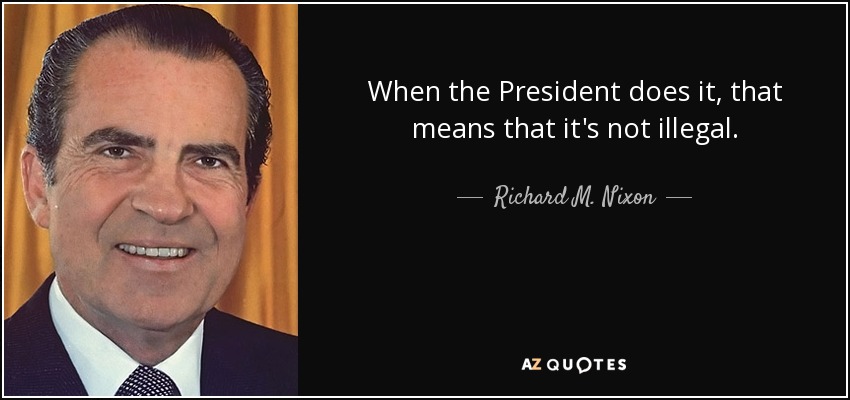
  • I don’t disagree, but the problem is that once you set up a particular oversight mechanism to monitor an official office like the Presidency, it is ripe for abuse. Just imagine what Republicans did to the Supreme Court, but laid as a boobytrap to cut any Democratic President off at the kneees. I think the Founders had it correct there, giving the Presidency broad powers but giving the Legislature equally broad oversight authority, because the Legislature answers to the People every two years.

    It’s not the founders’ fault that the Republicans in Congress choose to abandon that oversight when the President breaks laws to push their collective agenda.