
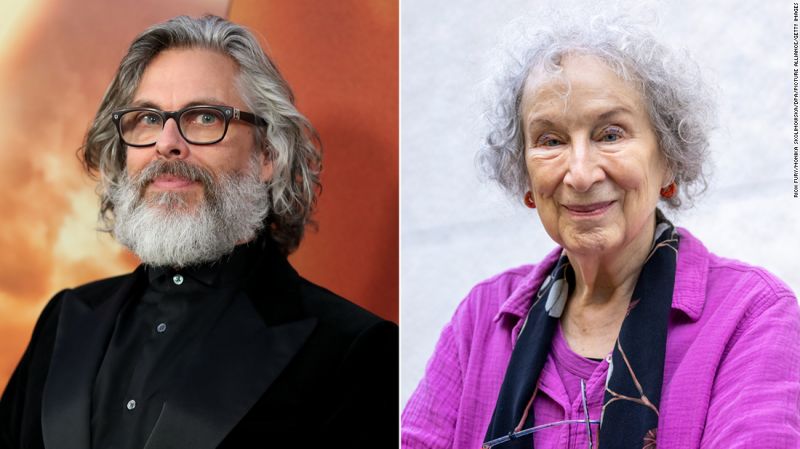
Thousands of authors demand payment from AI companies for use of copyrighted works::Thousands of published authors are requesting payment from tech companies for the use of their copyrighted works in training artificial intelligence tools, marking the latest intellectual property critique to target AI development.
This is demonstrably wrong. You cannot buy a book, and then go use it to print your own copies for sale. You cannot use it as a script for a commercial movie. You cannot go publish a sequel to it.
Now please just try to tell me that AI training is specifically covered by fair use and satire case law. Spoiler: you can’t.
This is a novel (pun intended) problem space and deserves to be discussed and decided, like everything else. So yeah, your cavalier dismissal is cavalierly dismissed.
I completely fail to see how it wouldn’t be considered transformative work
It fails the transcendence criterion.Transformative works go beyond the original purpose of their source material to produce a whole new category of thing or benefit that would otherwise not be available.
Taking 1000 fan paintings of Sauron and using them in combination to create 1 new painting of Sauron in no way transcends the original purpose of the source material. The AI painting of Sauron isn’t some new and different thing. It’s an entirely mechanical iteration on its input material. In fact the derived work competes directly with the source material which should show that it’s not transcendent.
We can disagree on this and still agree that it’s debatable and should be decided in court. The person above that I’m responding to just wants to say “bah!” and dismiss the whole thing. If we can litigate the issue right here, a bar I believe this thread has already met, then judges and lawmakers should litigate it in our institutions. After all the potential scale of this far reaching issue is enormous. I think it’s incredibly irresponsible to say feh nothing new here move on.
Being able to dialog with a book, even to the point of asking the AI to “take on the persona of a character in the book” and support ongoing is substantively a transcendent version of the original. That one can, as a small subset of that transformed version, get quotes from the original work feels like a small part of this new work.
If this had been released for a single work. Like, “here is a star wars AI that can take on the persona of star wars characters” and answer questions about the star wars universe etc. I think its more likely that the position I’m taking here would lose the debate. But this is transformative against the entire set of prior material from books, movies, film, debate, art, science, philosophy etc. It merges and combines all of that. I think the sheer scope of this new thing supports the idea that its truly transformative.
A possible compromise would be to tax AI and use the proceeds to fund a UBI initiative. True, we’d get to argue if high profile authors with IP that catches the public’s attention should get more than just blogger or a random online contributor – but the basic path is that AI is trained on and succeeds by standing on the shoulders of all people. So all people should get some benefits.
Transformativeness is only one of the four fair use factors. Just because something is transformative can’t alone make something fair use.
Even if AI is transformative, it would likely fail on the third factor. Fair use requires you to take the minimum amount of the copyrighted work, and AI companies scrape as much data as possible to train their models. Very unlikely to support a finding of fair use.
The final factor is market impact. As generative AIs are built to mimic the creativite outputs of human authorship. By design AI acts as a market replacement for human authorship so it would likely fail on this factor as well.
Regardless, trained AI models are unlikely to be copyrightable. Copyrights require human authorship which is why AI and animal generated art are not copyrightable.
A trained AI model is a piece of software so it should be protectable by patents because it is functional rather than expressive. But a patent requires you to describe how it works, so you can’t do that with AI. And a trained AI model is self-generated from training data, so there’s no human authorship even if trained AI models were copyrightable.
The exact laws that do apply to AI models is unclear. And it will likely be determined by court cases.
No, you misunderstand. Yes, they can control how the content in the book is used - that’s what copyright is. But they can’t control what I do with the book - I can read it, I can burn it, I can memorize it, I can throw it up on my roof.
My argument is that the is nothing wrong with training an AI with a book - that’s input for the AI, and that is indistinguishable from a human reading it.
Now what the AI does with the content - if it plagiarizes, violates fair use, plagiarizes- that’s a problem, but those problems are already covered by copyright laws. They have no more business saying what can or cannot be input into an AI than they can restrict what I can read (and learn from). They can absolutely enforce their copyright on the output of the AI just like they can if I print copies of their book.
My objection is strictly on the input side, and the output is already restricted.
Makes sense. I would love to hear how anyone can disagree with this. Just because an AI learned or trained from a book doesn’t automatically mean it violated any copyrights.
The base assumption of those with that argument is that an AI is incapable of being original, so it is “stealing” anything it is trained on. The problem with that logic is that’s exactly how humans work - everything they say or do is derivative from their experiences. We combine pieces of information from different sources, and connect them in a way that is original - at least from our perspective. And not surprisingly, that’s what we’ve programmed AI to do.
Yes, AI can produce copyright violations. They should be programmed not to. They should cite their sources when appropriate. AI needs to “learn” the same lessons we learned about not copy-pasting Wikipedia into a term paper.
It’s specifically distribution of the work or derivatives that copyright prevents.
So you could make an argument that an LLM that’s memorized the book and can reproduce (parts of) it upon request is infringing. But one that’s merely trained on the book, but hasn’t memorized it, should be fine.
But by their very nature the LLM simply redistribute the material they’ve been trained on. They may disguise it assiduously, but there is no person at the center of the thing adding creative stokes. It’s copyrighted material in, copyrighted material out, so the plaintiffs allege.
They don’t redistribute. They learn information about the material they’ve been trained on - not there natural itself*, and can use it to generate material they’ve never seen.