

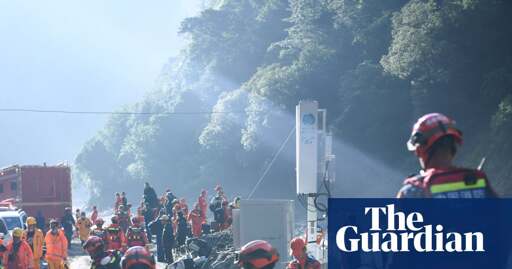
A Chinese rescue team has reached the all-but-obliterated Gyirong border crossing complex for the first time and found “nothing but ruins” as Nepal and China continue their arduous rescue operations in the flood-hit Himalayas.
Surveillance camera footage from the worst-hit Gyirong border crossing complex showed huge torrents of water and debris on Wednesday engulfing buildings and people trying to flee. Only on Friday were rescuers able to reach the area.
State media reported that the Chinese team of 21 rescuers and a search-and-rescue dog crossed mountains and valleys and used ropes to navigate forests and cliffs after roads to the complex, hemmed in by steep Himalayan slopes, were destroyed.
…
More than 90,000 people have been affected by the disaster, the Red Cross estimated.
Do they not have helicopters?
They do have helecopters, but the mountains surrounding the area are too high elevation for them to be useful.
Also they don’t have many of them
https://www.chosun.com/english/national-en/2026/08/29/TUPOB2WOQZGQREQIEO7T2XBCKI/