

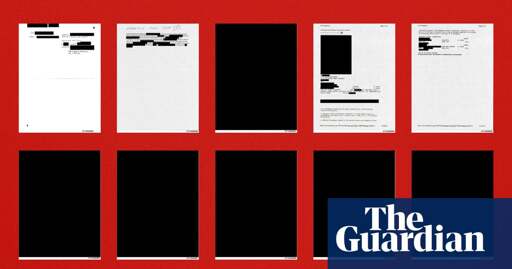
Un-redacted text from released documents began circulating on social media on Monday evening
People examining documents released by the Department of Justice in the Jeffrey Epstein case discovered that some of the file redaction can be undone with Photoshop techniques, or by simply highlighting text to paste into a word processing file.
Un-redacted text from these documents began circulating through social media on Monday evening. An exhibit in a civil case in the Virgin Islands against Darren K Indyke and Richard D Kahn, two executors of Epstein’s estate, contains redacted allegations explaining how Epstein and his associates had facilitated the sexual abuse of children. The exhibit was part of the second amended complaint in the state case against Indyke and Kahn.
Did they just change the back and foreground colours to black and call it a day?
I would like to think that it was on purpose. So whoever was working on that knew that someone could realize it. I don’t know why I keep having faith in people.
It makes sense. They didn’t flush the entirety of the FBI and we know Patel isn’t doing all this himself, so I too believe that there are people just doing some good ol’ malicious compliance. Apparently documents from previous administrations didn’t have this issue so they could do it correctly, they just aren’t.
It’s a shockingly common source of data leaks. There are some versions with more subtlety, like actually redacting the text but a copy of it remains in the file for version tracking, as a separate layer, or things like that.
PDF is derived from printer control tools, and has a lot of features built in that add flexibility for office document purposes, but can be surprising for people not expecting it.
If you’re working as a team to redact documents you might deliberately use something reversible so that the person checking your work can 1) see what you redacted 2) unredact if they think you shouldn’t have.
Sometimes people also just don’t know there’s actual reaction tools built in.
The part that I’m more surprised by is that whatever process they have for releasing documents didn’t involve passing it through a system of some sort that automatically fixed that sort of thing.