

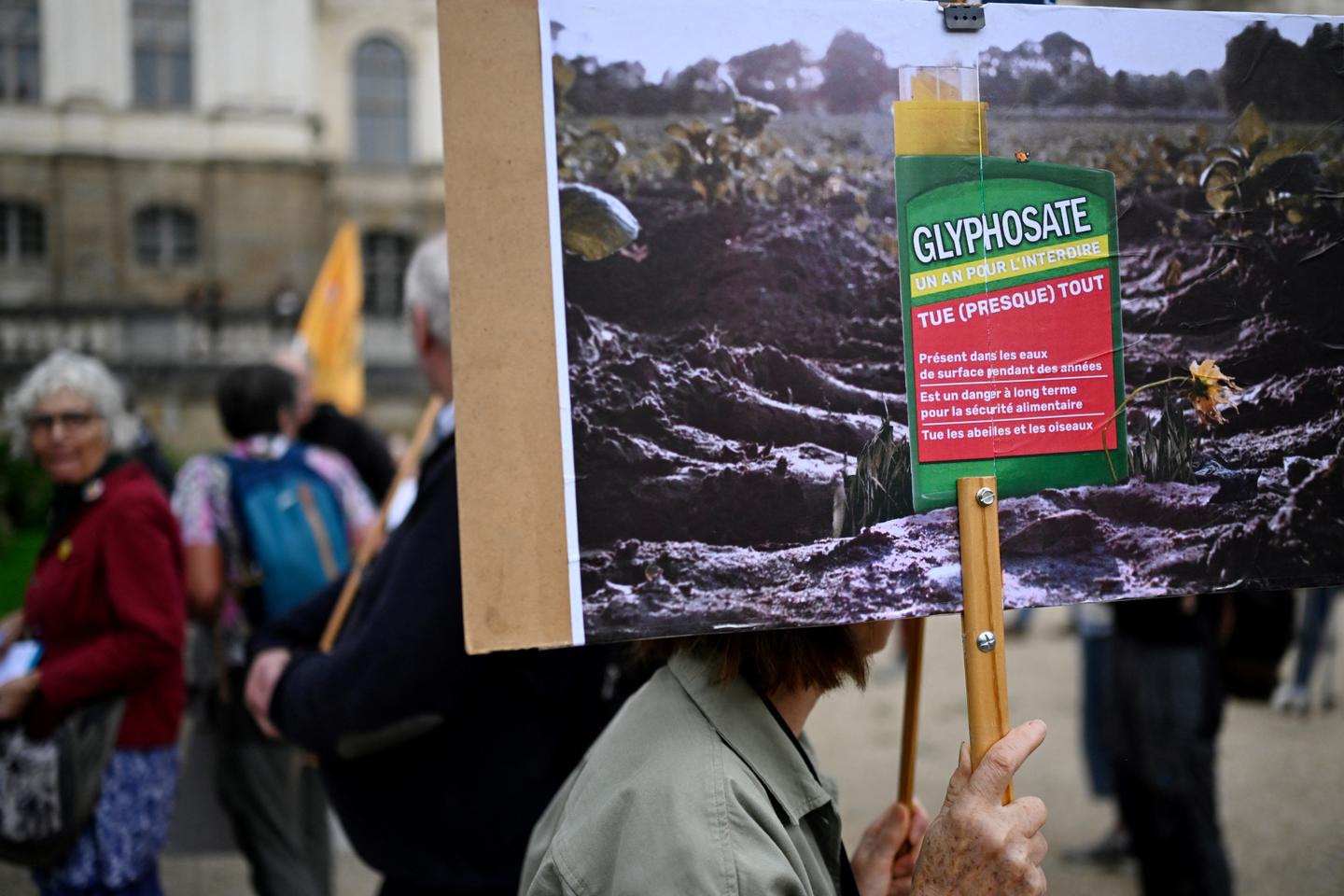
A quarter-century after its publication, one of the most influential research articles on the potential carcinogenicity of glyphosate has been retracted for “several critical issues that are considered to undermine the academic integrity of this article and its conclusions.” In a retraction notice dated Friday, November 28, the journal Regulatory Toxicology and Pharmacology announced that the study, published in April 2000 and concluding the herbicide was safe, has been removed from its archives. The disavowal comes 25 years after publication and eight years after thousands of internal Monsanto documents were made public during US court proceedings (the “Monsanto Papers”), revealing that the actual authors of the article were not the listed scientists – Gary M. Williams (New York Medical College), Robert Kroes (Ritox, Utrecht University, Netherlands), and Ian C. Munro (Intertek Cantox, Canada) – but rather Monsanto employees.
In cautious terms, Martin van den Berg, co-editor-in-chief of Regulatory Toxicology and Pharmacology, noted that “employees of Monsanto may have contributed to the writing of the article without proper acknowledgment as co-authors. This lack of transparency raises serious ethical concerns regarding the independence and accountability of the authors of this article and the academic integrity of the carcinogenicity studies presented.” Other failings are cited, notably the failure to disclose the authors’ compensation by Monsanto. “The potential financial compensation raises significant ethical concerns and calls into question the apparent academic objectivity of the authors in this publication,” van den Berg added.
Scientists who allow their names to be used as cover for corruption should be barred from ever publishing again, and all their other papers should have an asterisk.
They ceased to be scientists at that point.This is a problem generally in science. Research is often funded by business and their objectives only ever align with the pursuit of scientific truth by accident. The Open Science initiative has some good mitigations for this problem.
The disavowal comes . . . after thousands of internal Monsanto documents were made public . . . revealing that the actual authors of the article were . . . Monsanto employees.
Those employees and the managers who created the fraud are not named.
They should be more than named
Anyone that has been near an open barrel of glyphosate will tell you it’s obviously poison
I thought glycol phosphate pesticides were derivative of Agent Orange that was used in Vietnam.